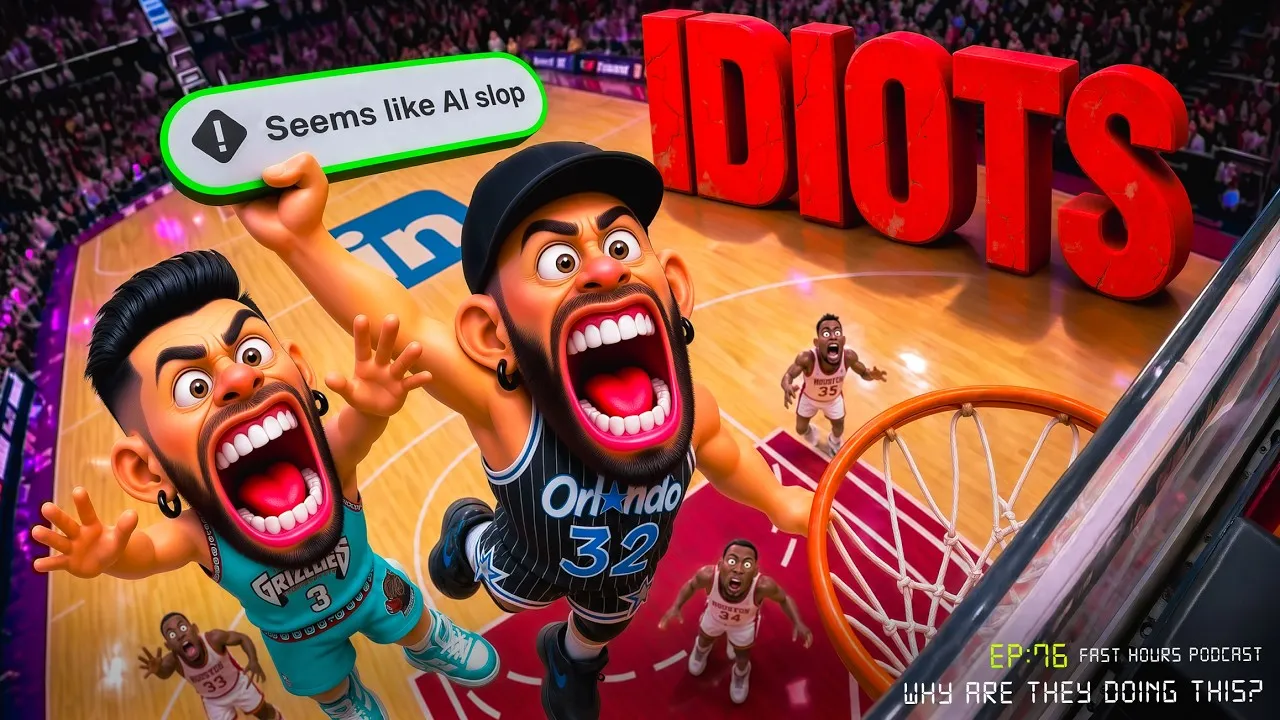
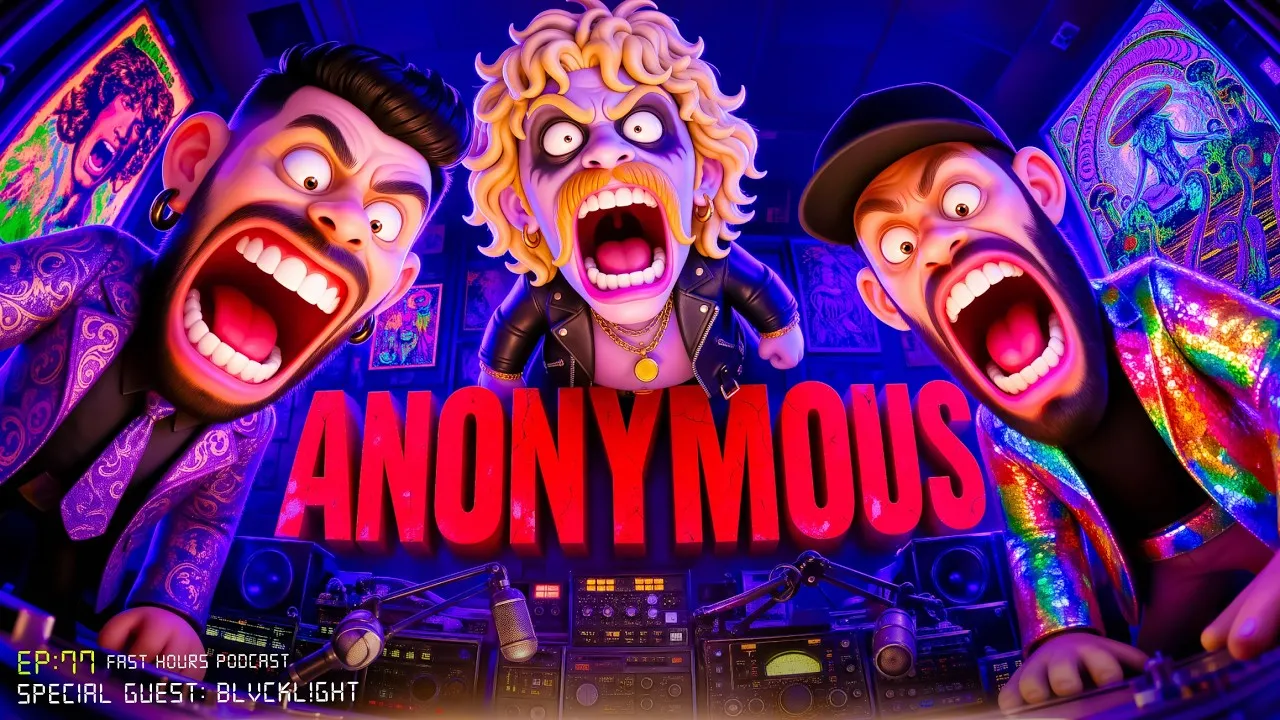
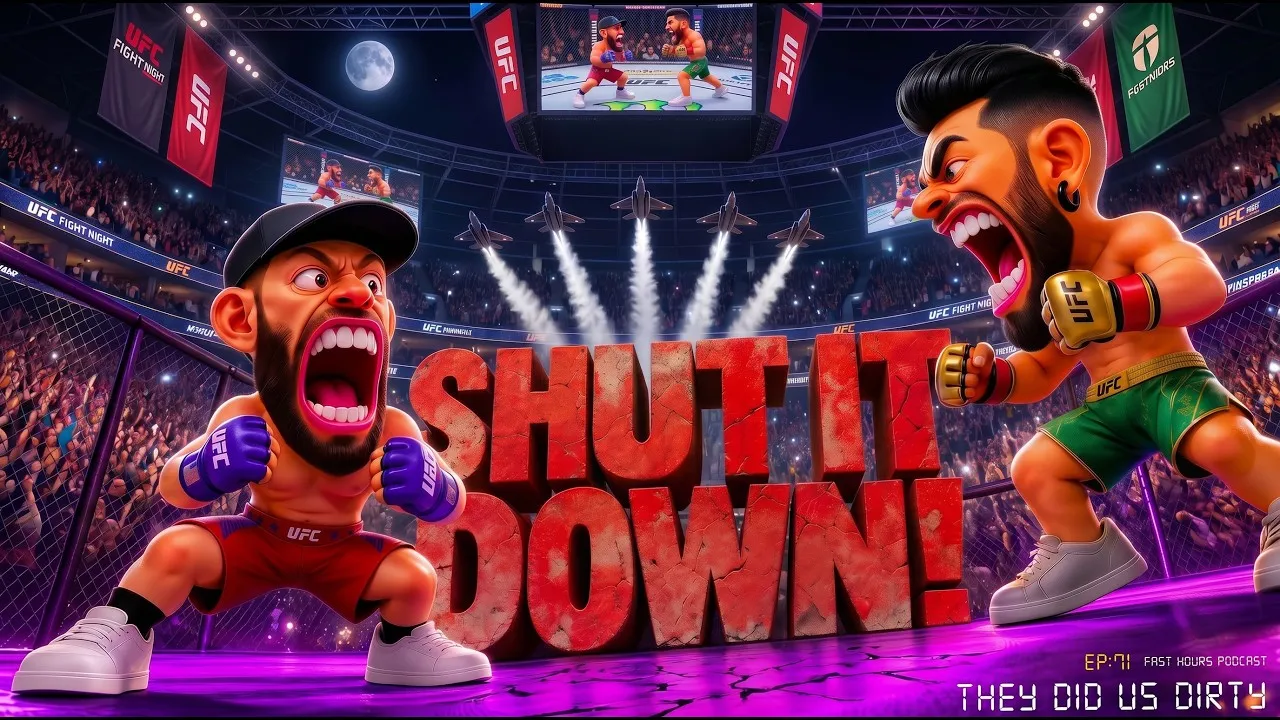
EP 087 · 109 MIN SIX MONTHS AGO WE WERE GOING TO HIRE
We Built an Entire Creative Team With AI Agents. It's Getting Weird.
The short version
Episode 87 is a no-guest catch-up in which Rory Flynn and Drew Brucker, marking 100,000 YouTube subscribers, walk through the agent system that now runs much of Fast Hours: Riverside, Magnific and Runway MCPs, Claude skills for titles, clips and thumbnails, and an auto-published website. Drew builds a squirrel video game with Claude alongside his dad; Rory shows a multi-model Claude design team and a camera-operator skill for AI video.
Key takeaways
- 01
Pair opposite asks: Drew alternates between requesting ten wow-factor ideas and having the model red-team the same work for weaknesses, blind spots and contradictions.
- 02
Cast models by temperament: Rory's website ideation team mixed Fable, Opus, Sonnet and Haiku personas, and Haiku's 'Pixel Gremlin' brought the terminally online Easter-egg ideas.
- 03
Play the skeptic: Drew asks the model to be someone who hates him and hunts for flaws, then revises until that skeptic would reach out with praise.
- 04
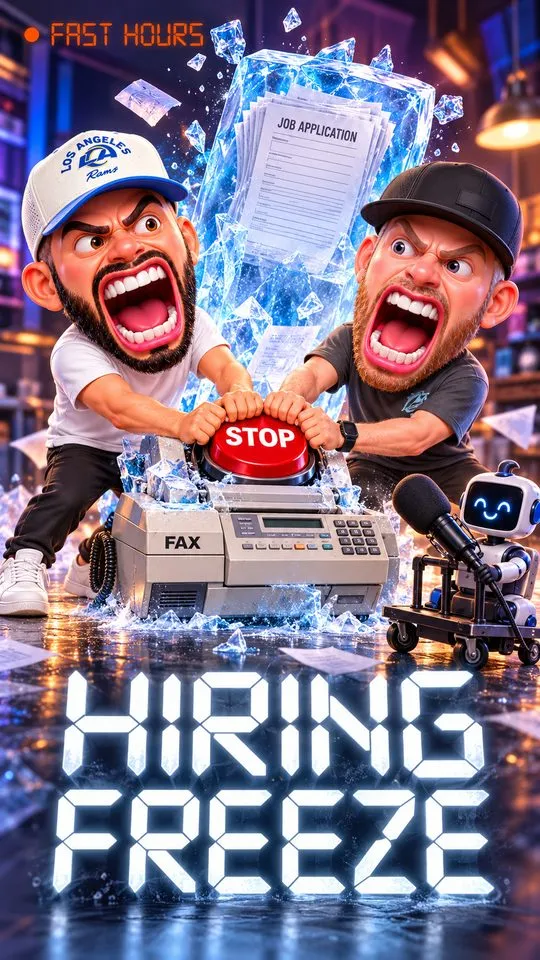
Codify what repeats: episode thumbnails went from about six hours to thirty minutes once Rory found consistent characters and turned the process into a system.
- 05
Give AI video a camera operator: Rory's prompt engine gets more dynamic shots when a skill makes it think like the person holding the camera, not a prompt.
- 06
Solve it once, reuse it: Drew turns builds like a page-by-page content auditor into white-label agents for the next look-alike marketing client.
- 07
It's still work: Rory stresses that 'just go do this' only works after many workflows, system prompts and mess-ups, and Drew calls it a climb.
Receipts · said on the record
“we've built an entire team for this podcast with AI agents and it operates and it works, right? Like that's real.”
“Slop as a medium … it's entertainment. What is short form content? It's entertainment. No one's on here. Like outside of X maybe to learn something.”
“be a skeptic who comes to my site. You're someone that hates me. You look for flaws anywhere. How would you revise, tweak, add, remove?”
“it just evolved and evolved and evolved … not completely automated, but like that went from I don't know, six hours down to thirty minutes for us now.”
“for anyone who thinks this isn't work though, like the amount of engineering that goes into this stuff to get it there”
“I just built like a skill around a camera operator that talks to now my prompting engine and it gets way better, more dynamic results”
Chapters
- 0:00:00 Fast Hours hits 100K subscribers
- 0:04:21 Flying cars are getting ridiculous
- 0:11:26 Cars are becoming software platforms
- 0:14:40 Why AI is destroying traditional software moats
- 0:16:09 AI can reverse-engineer entire software products
- 0:20:32 The competitive advantages that still matter
- 0:23:11 We built an entire creative team with AI agents
- 0:25:33 The AI creative explosion
- 0:30:26 Combining AI, Blender, Excel, and code
- 0:32:25 The new formula for creating with AI
- 0:34:37 Building a video game with Claude
- 0:43:13 Turning curiosity into an AI learning program
- 0:46:44 A new approach to creative ideation
- 0:48:41 Building a team of specialized AI agents
- 0:52:39 Tracking how AI crawlers interact with websites
- 0:54:51 Using AI skeptics to improve creative work
- 0:56:47 Our AI-powered podcast production system
- 1:00:51 Cutting thumbnail production from 6 hours to 30 minutes
- 1:02:37 Automating podcast publishing with AI agents
- 1:04:45 Building reusable AI workflows for clients
- 1:07:01 Running entire creative projects with AI agents
- 1:09:49 Creating interactive websites with AI
- 1:12:22 Automated creative testing and quality control
- 1:17:10 Better AI video with virtual camera operators
- 1:18:39 Recreating Fast & Furious scenes with AI and Blender
- 1:21:51 The problem with unlimited creative possibilities
- 1:23:36 Drew shares 12 free Claude skills
- 1:26:18 Rory's Lord of the Rings AI agent army
- 1:29:24 Should AI agents handle your personal life?
- 1:36:03 Midjourney explores MCP integration
- 1:36:55 Apple, Meta, and the future of local AI
- 1:41:38 Remembering Napster, LimeWire, and early computing
- 1:46:43 Final thoughts and shout-outs
Questions this episode answers
How does Fast Hours use AI agents to produce the podcast?
Drew describes the chain: the Riverside MCP pulls the episode, a YouTube skill system writes titles, descriptions, chapters and tags, a clipper cuts clips with motion graphics, a thumbnail system builds vertical thumbnails with locked characters, and the website publishes the episode. Rory says the clipper runs in about two hours.
What are Drew Brucker's free Claude skills?
Drew shared 12 skills at github.com/dcbruck/claude-skills, including Blind Spot (ideas you haven't thought to ask for), Domain Jack (borrows an idea from another industry), Adopt and Mine (pulls ideas out of any transcript). He says red-teaming doesn't really need a skill because the models already know it well.
How did Rory Flynn recreate the Fast & Furious drag race with AI?
Rory had Claude break down the final drag race and rebuild it as a Blender scene with physics, then fed the Blender render, car contact sheets, real location photos and a cinematography card to AI video as references. Because the animation is fixed, he can shoot the same scene from different angles; he says it isn't perfect.
What is a camera operator skill for AI video prompts?
Rory built a skill that talks to his prompting engine so it thinks like a camera operator instead of a prompt, which he says gives more dynamic, less static results. He has variants for vintage looks and for clean, 60fps Pixar-style 3D.
What did Fast Hours learn from tracking AI crawlers on its website?
Using Cloudflare with Claude, Rory found that in the site's first week someone asked an AI about the show 54 times, and Meta's crawler made about 20,000 visits for training. He plans to tailor the site so AI answers quote Fast Hours.
Show notes
Drew Brucker and Rory Flynn have officially reached the point where their AI agents are doing more work than they can keep track of.
Six months ago, they were discussing who they'd need to hire to scale Fast Hours. Now they've built an interconnected system handling everything from podcast clips and thumbnails to website publishing, creative production, and client workflows.
Naturally, that freed up enough time for Drew to spend an unreasonable number of hours building a squirrel video game with his dad, while Rory assembled an army of AI agents inspired by Lord of the Rings.
Somewhere between the squirrels, the robots, and the existential questions about creative work, there's a pretty compelling picture of what happens when AI gives people the ability to execute their ideas.
[Discussed in episode] Drew Brucker and Rory Flynn explain AI agents, Claude skills, Model Context Protocol integrations, and reusable creative workflows. Fast Hours production covers Riverside, Cloudflare, YouTube packaging, clip selection, and thumbnails. Creative experiments span Blender, Magnific, Runway, Higgsfield, and Figma. Examples show agent teams, model specialization, automated quality control, and context-driven production.
The episode, narrated
Nobody got hired.
Six months ago, Drew and Rory talked about who they'd need to hire to scale Fast Hours. On the 100K-subscriber episode they show what they built instead: agents that clip, package and publish the show, a squirrel game, a CIA university and a Lord of the Rings war room for X. This is the whole episode, narrated chapter by chapter, with every business lesson pulled out and pinned to the moment it was said.
The 30-second version
- 01
Build the team you couldn't hire. Clips, packaging, thumbnails and web pages for the show now run on agents. Thumbnails went from about six hours to thirty minutes.
- 02
Aim the model at your own work. Ask for wow factor, then a red team, then a skeptic who hates you. Revise until that skeptic would praise you.
- 03
Lock the inputs. A shared light sphere, a camera-operator skill, a white-label agent. Solve the variable once and every later output inherits the fix.
00Shorts · The episode in clips
The episode in 15 shorts.
The motion-graphic cuts from this episode, in episode order. Tap any one to watch the run back to back.








Now we got flying cars.
Episode 87 opens on a number. The Fast Hours YouTube channel just passed 100,000 subscribers, and Drew thanks the listeners who go back to the LinkedIn Live days.
There's no guest this week. Drew has two pages of notes. Rory says a few days off the feed now leaves you behind.
“Now it's like I don't even know how we can leave things out because it's so fast and there's so much.”
First up is a viral flying-car video. The car climbs a wall, drives upside down and kicks off a ramp. Drew notes the version he shows is an AI rendition. Rory is struck by the method more than the stunt.
“When you picture flying cars in your head, I think everyone went the traditional route when you saw flying cars. … And then this one just comes out and it's like, I can kick flip now with compressed gas.”
Both hosts drive electric now, which neither expected. Then the talk turns to what the car has become. Rory woke up to his car offering a Ghostbusters mode, part of a Halloween partnership.
“Number one, super cool that they can run a partnership like that. Number two, I feel weird that my car is now a marketing tool.”
“The software is now visible to the driver.”
“I can drive better now by myself autonomously because I just downloaded a software update.”
Rory's worry is hardware. Years ago a robot offered to carry his bags at an airport in Korea. Outside Tesla, he sees no US maker pushing hardware that hard.
“Software, yeah, we're all over it. But it's like when does hardware catch up?”


The moat dried up.
Drew picks up the hardware thread. Software is easy to copy now. He built his own Calendly a year ago.
“A lot of the software, right? You could clone it. The moat's dried up in a lot of ways.”
So he hesitates to productize his own tools. A tailored build for one niche beats an all-in-one, and anything generic gets copied fast.
“I probably could have productized some of this stuff … but it's probably the lunch is gonna get eaten soon.”
Rory brings receipts. A GitHub repo for reverse-engineering software took over his feed that week, with agents taking apps and games apart and rebuilding them. Then he reads a note Xbox's CEO sent her team.
“It was basically like, we no longer have an advantage, essentially … everything that we've done can be done now with AI.”
Rory's summary of her answer: a small Xbox Labs group, old games reworked in new ways, and players as co-creators. He hears an echo of what Rourke predicted on the show a few weeks earlier. Drew likes the honesty.
“I feel like there's a lot of people in their shoes that are not willing to say that.”
“These companies cannot move fast enough. … There are too many people involved in these decisions.”
Then Drew reads a post from Lenny on what still counts as a moat. Lenny might follow the show. Rory asks him to blink twice. Sort the list yourself.
Moat or not?
Seven items from the post Drew read on air. Call each one, then see the post's verdict and Drew's note.
-
1/7
Distribution
Episode: Not a moat
On the post's not-a-moat list. Drew half-disagrees: rented social channels aren't a moat, but an owned list like a newsletter might still hold a layer.
-
2/7
Execution
Episode: Not a moat
On the post's not-a-moat list. When software can be cloned, shipping well is the price of entry.
-
3/7
Brand
Episode: Not a moat
The post says a brand can be one, but it takes too long to build for it to work as a moat.
-
4/7
Switching costs
Episode: Moat
The stickiness of something. The pain of leaving compounds over time.
-
5/7
Network effects
Episode: Moat
Every new user makes it worth more. Drew's example from his LASSO days: a marketplace of companies staffing events and the people who want those jobs.
-
6/7
Scale economics
Episode: Moat
More volume, more efficient operations, lower unit costs.
-
7/7
Data effects
Episode: Moat
More usage makes more data. Drew thinks software companies underrate the data they already hold.
Drew pushes back on one verdict. Rented channels like social are no moat. An owned list, like a newsletter, might still hold a layer. He also thinks software companies sit on data they underrate.
“SaaS companies and software companies do have a lot of data. Maybe that's actually an advantage that they're not paying enough attention to.”

The creative explosion.
Rory zooms out. He calls this the biggest economic shift any of us has seen, and he's done hearing that AI is a glorified search engine.
“We're sitting through the biggest shift in the modern world, from an economic standpoint, that we've ever seen.”
“We've built an entire team for this podcast with AI agents and it operates and it works, right? Like that's real.”
“Six months later, we don't need to really hire anyone because we've built the tools that we need to service this thing.”
“But also we don't make enough money from this podcast to hire people. So there you go.”
Drew's verdict on the doubters is short.
“You're gonna sound really ignorant and naive if you say that at this point.”
Then the name Rory coined for what they're seeing: the creative explosion. Images, then video, then 3D and motion, and now a meme wave built on character swaps. Rory bookmarked more in three weeks than in the six months before.
“Slop as a medium. … It's entertainment. What is short form content? It's entertainment.”
He sees a business model in it, and a shift in how people watch. The first question about any clip is now whether it's AI.
“My initial assumption is that is AI, and then I have to go backfill to find if it's actually not.”
His favorite example is a Japanese creator on X who builds motion graphics in Excel, moves them into Blender and runs it all through Opus.
“Who is thinking about doing Excel motion graphics mixed with Blender, I don't know, three months ago? One month ago?”
“All of your talents can now be sort of amplified. Your craziest ideas can now be amplified.”
Drew asks for the formula they landed on the week before. Rory gives it in three parts.
“Context, domain expertise, and vision.”
The new formula
-
01
Context
What the model knows about you, the work and the job.
Drew hands over a few objects from his desk and the brief. The MCPs generate every image on his site. Chapter 8: White label →
-
02
Domain expertise
Knowing what good looks like, and the words for it.
Rory knows Blender's nodes and the pebble grain he wants. When the words run out, a research prompt fills the gap. Chapter 9: Light sphere →
-
03
Vision
The picture in your head before the first prompt.
A retired dad's fence feud becomes a game with a hawk, a sprinkler and a dog. Chapter 4: Squirrels →
“It sounds like everything you've ever done in business, right?”
Rory wishes for 48-hour days. A friend of the show, Blacklight, just shipped a video game set in his own universe of characters. The world now lives in content, social pages and play.
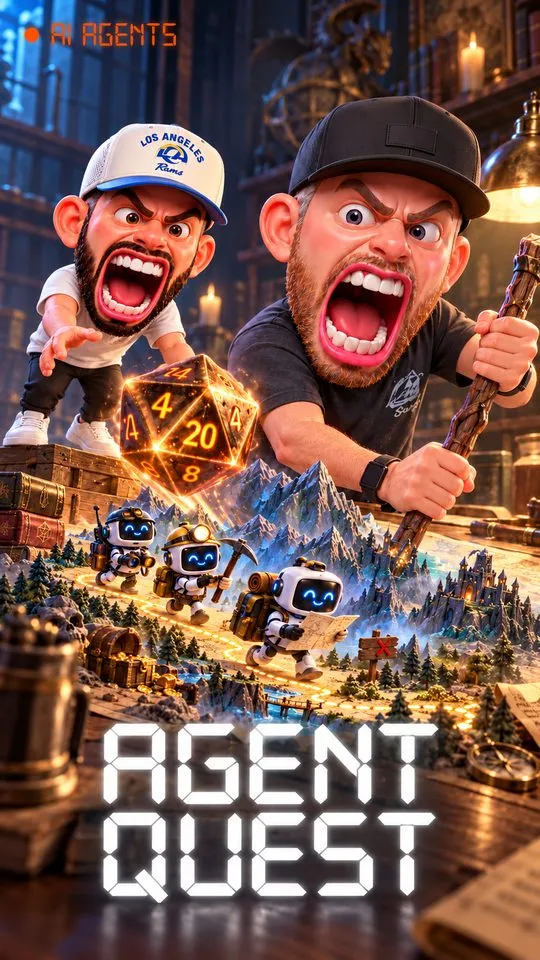
A game for Dad.
Drew made a video game. It started with his retired dad, who watches squirrels feud over the fence in his backyard.
Drew had never sat beside his dad and shown him AI. So he suggested they build the game together.
“Let's just build it together. … We're just gonna talk to Claude and we're gonna tell him what we want and what's in our head.”
The first idea was two squirrels fighting over acorns. Then came a hawk that swoops in, a sprinkler that knocks them off and a dog that chases them.
“I spent way too much time on this. Way, way, way too much time on this for absolutely zero reason.”
He now has his own domain and two games, with a third in progress. The stash game has a treehouse, power lines and a flock camera. The polish came from iteration.
“I think I went through four usage limits trying to get this fully here.”
The game syncs to the calendar. Set it to December and there's snow and bare trees. Set it to the Fourth of July and there are fireworks. Rory said it felt like a fighting game, so Drew built a battle mode with knockouts. A kart-racing version is next.
“This is the creative expression that we have now.”
Play it at squirrelscramble.com. Source: Squirrel Scramble.

Figure it out.
The flock camera in Drew's game reminds Rory of a post he saw. It sounds like a sci-fi plot.
“He figured out a way to torture the flock camera by hacking into it and showing it twenty seven thousand images per second or something like that to scramble its brain.”
Humans torturing the AIs. Rory's feed then served him people building little training chambers to wear AI down. He pitches it as the next hit streaming series, and he wonders whether an AI came up with it.
“It's here and it's not going away and it's only gonna get weirder.”
Drew's takeaway is wider.
“Even if you don't know, you figure it out now. … Anything now you can figure out.”
His example: he heard a former CIA officer tell stories on a podcast and wanted to learn the craft. So he asked.
“Man, can you put together a daily thing for me to teach me how to be like a CIA … operative?”
Rory guesses it's a skill. Drew corrects him.
“It's basically like a program I'm going through.”
Each lesson has a learn step, a live drill and a quiz. Rory sums up the week.
“Between Squirrel Universe and CIA University, you've been having a good week.”


Hire a hater.
Drew describes the loop he runs on almost everything he makes now, from the squirrel game to his website. He swings between two extremes.
“I'm looking for all the weaknesses, blind spots, voids, bugs, errors, contradictions, whatever it may be on one side. And the other side, I'm looking for these novel, imaginative, playful, wow factor …”
Rory knows the pull. He has to stop himself halfway through builds.
“I've overburdened myself with work because I can now and that's the problem.”
He took Drew's wow-factor habit further. On the new website project, he asked Opus to staff a design agency, with a twist.
“You're basically gonna act as my web design agency … put together a team. … I wanted to test the different models.”
Drew calls it a creative take on picking the right model for the job. Rory's reasoning:
“Some of the simplest ideas might come from the simplest models.”
The weird team, on a loop
Rory asked Opus to run a design agency staffed by different models. Each pass loops until there's a verdict.
- 01Brief the team
- 02Agents pitch
- 03Opus pools it
- 04Refine
- 05Remix ×3
- 06Verdict
The roster Rory got back
- Fable · shader wizard, game UI, 3D renders
- Sonnet · audio-reactive visuals, physics, phone-first
- Haiku · Pixel Gremlin: Easter eggs, cursor toys, secret modes
- Opus · pools the pitches, refines and remixes
- Out: an artifact of every idea, filterable
“If Haiku wasn't there, it wouldn't have gotten to be the persona of Pixel Gremlin, 20 years old, terminally online.”
The team cataloged every idea in a filterable artifact, from snoozing the website like an alarm clock to a Fast Hours MCP. Rory built the easiest one first. The site runs on Cloudflare, which works well with MCP, so he had Claude track how AI hits the site. It had been live for one week.
“Someone asked an AI 54 times about us.”
“Meta had 20,000 visits in a week to our site to train.”
Now they can see which bots train on the site, which ones answer questions about it and what they reread. Rory wants to shape the site so answer engines quote it. It all traces back to one ask.
“Drew said, give me wow factors. I said, all right, build a weird team to give me weird wow factors. And then I just implemented one.”
Drew adds the other half of his loop: a skeptic.
“Be a skeptic who comes to my site. You're someone that hates me. You look for flaws anywhere.”
“How would you revise, tweak, add, remove what we've come up with here in order to leave you, the skeptic, as someone who's blown away … and has no other choice but to proactively reach out to me and praise me for this.”
Three passes on one page
Same draft, three prompts. Drew runs all three. Pick one and see what comes back.
Draft · example homepage
- Headline: “Creative work, built with AI.”
- Two buttons: Book a call · See the work
- Three case studies below the fold
Wow factor
PromptNovel, imaginative, playful, wow factor.
Ideas 03
- Let visitors poke the hero and watch it react
- Hide a secret mode behind a key combo
- Lay the case studies out as objects on a desk
Great ideas. Nothing checks whether the page holds up.
Red team
PromptAll the weaknesses, blind spots, voids, bugs, errors, contradictions.
Flags 03
- No proof above the fold
- The headline could belong to anyone
- Case studies claim results with no numbers
Real problems, and no direction for the fix.
The skeptic
PromptBe a skeptic who comes to my site. You're someone that hates me. You look for flaws anywhere. How would you revise, tweak, add, remove…
Fixes 04
- Revise · Put one result in the headline
- Tweak · Cut the second button
- Add · A number on every case study
- Remove · The line any studio could write
The pass stops when the skeptic would reach out to praise you.
“That's a great piece of prose.”
Drew says the skeptic got him different results than a plain red team. It makes the model get ahead of the critique.


The show runs on agents.
Drew walks through what happens to an episode now. Two years ago their big build was a custom GPT stuffed with transcripts. Today the chain starts the moment they stop recording.
“We've got Riverside MCP. … So all I'm doing is I'm running an entire skill system called YouTube.”
That one skill returns title options, the description, chapters, tags, hashtags and targeting. A second pass writes social drafts.
“Here are 10 LinkedIn posts, here are 10 X posts. … And here's a newsletter post. … I don't even use them. I don't even have the time to use them yet.”
Then the clipper pulls the best moments and adds the motion graphics. On top of that sits a thumbnail system Drew built the week before.
“It basically locks in our characters and goes and put those together.”
It one-shotted thumbnails for last week's guest with no character sheet to start from. Episode pages, with the transcript and everything said, go live on the site. The last link is a companion page that tells the episode as a story, clips embedded. You're reading it.
Hit stop, watch the week fill
One recording in. What the agents ship after it, as described on air.
Episode 87 · recorded
- Source
- Riverside
- Runtime
- 1:49:13
- Guest
- None
- Hosts
- Drew + Rory
- 01 YouTube package: titles, description, chapters, tags
- 02 10 LinkedIn posts, 10 X posts, a newsletter tip
- 03 Clips with motion graphics
- 04 Thumbnails with both characters locked
- 05 Episode page and transcript, live on the site
- 06 This companion page
“Most of which was not possible six months ago.”
“Three months ago. Two months ago.”
They used to talk about finding a sponsor to fund a hire for clips. Then they'd have had to train that person and hand over access.
“It's just like, dude, we solved it.”
“Maybe if we have an employee now, they can just focus on making the show better and not having to do the ancillary stuff.”
Thumbnails were the first creative step they automated. Drew used to burn hours on each one while exporting and editing the episode. Rory found consistent characters and codified them.
“It just evolved and evolved and evolved … not completely automated, but that went from I don't know, six hours down to thirty minutes for us now.”
“The clipper is just ludicrous in terms of time and cost. … It runs in about two hours.”
Rory had Claude turn the back catalog into the website.
“We've catalogued eighty-six episodes into transcripts and into pages and blog posts on the website, which Claude did in an hour and a half.”
Claude also built the routine that repeats it every Sunday when an episode drops, with its own small agents in Cloudflare. By Friday, Rory had used 89% of his Claude Max plan.
“Again, it's things that wouldn't get done that are now getting done.”
“Holy crap, I got two weeks worth of work done today.”

Solve it once.
Drew brings the same logic to client work. Once he solves something for one marketing team, the next team probably needs it too.
“What if I have another client that is a look alike client to that? I don't have to spend the time that I did with that on the next one.”
His example is a content auditor agent. It reads every page and checks it against the client's positioning and messaging, and against what that page is supposed to do.
“Solve that once, go to another client, have that same thing. I have a white label version that I could just apply.”
“Five to six hours, Rory, is like, how much of that time is actually us time that we're doing that? Maybe 30 minutes going back and forth.”
He sells his time, so anything that takes him out of the loop gives time back. Rory is testing the same idea. He's running a project he has done many times through his whole pipeline and logging his manual time.
“As of right now, the only manual time is me writing the actual emails to the clients … finding errors and that's it.”
Scope, proposal, contract negotiation and project management all run through his pipelines. Agents test for errors and edge cases, call the Magnific MCP and Figma Weave, and post results to a Figma page he can share. When a product-scale problem came up, the agent proposed its own fix.
“It's like, I can build a custom node through your custom node skill that I found in GitHub … And I was like, you're remembering things? I don't even remember that I had.”
Drew's version is his website. He wanted a flat lay of objects tied to each project, then made it interactive: a remote that changes the TV, pins you can push in, a steaming coffee. The MCPs generated the images.
“I don't even have to worry about generating the images. I don't have to worry about the prompts. I'm just giving it the context to go and do it.”
“I only took a few items on my desk and I prompted for none of these images.”
“This was a project where I wouldn't want to spend a lot of time in a tool doing this myself when I just have the vision and I want it executed.”
Not screw-upable.
Rory explains where his time goes now. Mostly into system prompts, the instructions that make a workflow behave the same way every run.
“A lot of times what I'm building is system prompts, right? Like this is just how to get the whole thing to work exactly how we want it to every single time.”
Then agents run the tests he used to run by hand, across models, with a quality-control agent picking the winners.
“Instead of me sitting there and, all right, let me test this system prompt with Nano, GPT, Ideogram, this, that, whatever, then it's like, okay, it'll just go run the structured test.”
“Is this gonna work with every product on the site or is it only gonna work with these types of products? … Is a tube different than a cylinder?”
His favorite fix this week came from 3D.
“There's a really cool solution I found for consistent lighting … It's essentially a 3D technique. It's just a light sphere.”
“It's like if you had a static camera. You know, if you just had a camera on a stand in a studio and it was just blasting from the same angle for every product.”
Six products, one light
Prompt each shotRandom light
Light directions 06 07 Products 06 07
Six products, six light directions. Every new shot rolls the dice again.
Add a product: The new product gets its own light, and the set drifts further apart.
Lock it to a light sphereRory's fix
Light directions 01 01 Products 06 07
Six products, one light direction. Like a camera on a stand in a studio, blasting from the same angle.
Add a product: The new product snaps to the same angle as the rest.
“To figure out that exact thing to make it so perfect, so standardized and basically not screw-upable.”
Drew offers a better word, scrubbable. Rory takes it. Then he makes the point he cares about most.
“For anyone who thinks this isn't work though, like the amount of engineering that goes into this stuff to get it there.”
Drew calls it a climb. Rory's example: Blender couldn't get a leather grain right, so Claude wrote itself a research prompt in a side chat.
“It built its own new set of skills, did its own new set of research, came back and fixed it in one shot.”
“Domain expertise, man.”
When you lack the vocabulary, Drew says, the skill is knowing how to loop around and find it. Rory's last trick is for AI video, where his prompts kept producing stiff cameras.
“I just built a skill around a camera operator that talks to now my prompting engine and it gets way better, more dynamic results because instead of thinking like a prompt, it's thinking like a camera operator.”

Rebuild the race.
Rory shows the build he's proudest of.
“I had Claude and Blender go break down the final drag race scene from the Fast and Furious and build it out in a 3D model.”
Blender models who leads, the train jump, the truck hit and the flip, with real physics. The render then takes the Blender footage, car contact sheets, an environment sheet and a cinematography card as references. Rory researched the real filming location for that sheet.
“I put images from the real location in, not just from the movie set.”
“Is it perfect? No. Is it still wild? Yes.”
“I had people commenting on why there are two double yellow lines. I went and looked at the satellite photos. There's double yellow lines on that street.”
Because the scene lives in 3D, he can shoot it from a second angle and every beat lands at the same moment. Drew asks the obvious question.
“Are stunt men in trouble, bro?”
A LinkedIn commenter pushed back: with nobody in the car, does the scene have stakes? Rory took the point. Then he names the tension both of them feel.
“And the battle now is between creating content and doing stuff to build a business.”
“It's a whole rabbit hole that never ends.”
Drew splits the backlog three ways: new things that inspire you, things you could finish or improve, and things that need care before they go stale. Then he gives something away for listeners who stayed this long.
“There are 12 skills in here that I built that you have access to that you can just go do.”
The repo includes blindspot for ideas you haven't thought to ask for, domainjack for borrowing an idea from another industry, adopt for checking a new idea against what you already run, and mine for turning any transcript into ideas. He skips a red-team skill. In his tests, the models already know red-teaming.
“I don't think you need a skill for it, to be honest.”
The skills: github.com/dcbruck/claude-skills. Source: Drew's Claude skills on GitHub.

A fellowship for X.
Rory tries Grok Bot, the tool everyone on his feed was testing.
“I just wanted to show what 30 minutes of chaos in a brain can look like.”
His agent team runs his X account, cast from The Lord of the Rings. Legolas scouts. Gollum studies viral posts. Pippin hunts trending memes. Elrond is the content expert. Rivendell is the research hub and Minas Tirith the planning hub.
“We have Gollum who's analyzing viral posts.”
“Minas Tirith just stands them all up and they all report to it.”
Drew points out the bots can wear custom images. Rory's next idea is a little office where the agents talk to each other, like the Sims. He's spending $50 this month to see what it does, and he questions the main pitch he hears.
“They're like, I'm doing it for ops. I'm like, isn't everything we build now on Claude for ops?”
Neither host is ready to hand agents their personal errands yet, like reordering distilled water.
“I still don't want to give that up. It feels weird.”
With one exception. Rory's tip for listeners who stayed is about dynamic flight pricing. The same seats cost $150 more the next day because the site tracks you.
“I've only tried this with Muse, but Muse has direct link to the API. So you get API pricing and not the dynamic pricing tracked to your IP address.”
“I saved probably six hundred bucks on a three ticket flight.”
“I just paid eleven hundred for a trip to LA.”
The errand Rory would put on autopilot today: an agent that finds his personal data online and opts him out of the call lists. His number leaked from a conference talk posted to YouTube years ago, and the calls never stopped.
“Go scour the internet for my personal data and then have me unsubscribe from all of these call services and data opt ins.”


Bring your own compute.
Two quick news items before the wrap. Midjourney opened an application for a limited MCP community. Drew applied.
“This feels like a better route than the API.”
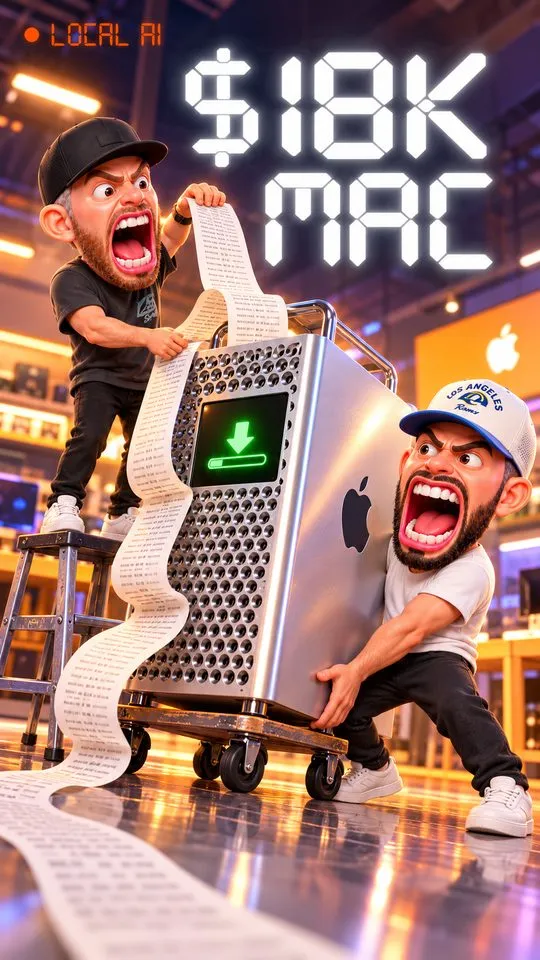
The second item is a report Drew read on air about Apple and Meta working to run Meta's Muse model locally on Macs. He thinks it hits the subscription model.
“Apple and Meta long rivals teaming up here to make the Muse AI model local on Mac computers in the future.”
“If you've got something that's already built in and already there and has the same capabilities and the stickiness doesn't exist … that lunch could get eaten.”
Rory checks the stock ticker. It's down for the week, which baffles him. Then he reads a post about Muse Spark, an open-weight coding agent you can download and run on a Mac Studio.
“I asked Muse about that. It said it needs about one point five terabytes to run.”
“Go get yourself an eighteen thousand dollar Mac Studio to run it on.”
“Gotta get that write off going.”
The hunt for more power sends them back to the nineties: LimeWire hammering the family computer, and the lag you learned to read.
“You got so used to how things would hang and lag that you almost knew how that particular lag would solve itself.”
Rory remembers Napster as the coolest thing that had happened to him as a kid. Drew has a take on how it ended.
“So they had Napster as the sacrificial lamb. They were the first and they got smoked.”
The sign-off rule stands: you don't have to like or subscribe, but you have to tell somebody. This week's pick is anyone who worked at RadioShack, Circuit City or Sharper Image. Two guests are booked for the next two weeks. Rory's math puts episode 100 in mid-January if they hit every week.
“Shout out to the people that worked at any of those companies.”

13The lesson ledger
16 lessons from 109 minutes.
Every lesson is tied to the moment it was said. Click a timecode to hear it in context. Each one ends with something to do on Monday.
If you only steal three
- Lesson 10 · CraftPrompt a hater
- Lesson 11 · LeverageOne recording, every asset
- Lesson 14 · CraftStandardize the input
- 01 Leverage
Build the team you couldn't hire
“Six months later, we don't need to really hire anyone because we've built the tools that we need to service this thing.”
Rory Flynn ▶ 0:23:16
Do this MondayList the roles you'd hire if money showed up tomorrow. Pick the most repetitive one and build an agent for its first task this week.
- 02 Mindset
Say the quiet part out loud
“I feel like there's a lot of people in their shoes that are not willing to say that.”
Drew Brucker ▶ 0:17:57
Do this MondayWrite one paragraph on what AI can now copy about your business. Share it with your team before a competitor proves it.
- 03 Distribution
Bet on moats that compound
“Maybe that's actually an advantage that they're not paying enough attention to.”
Drew Brucker ▶ 0:21:45
Do this MondayScore your business 0 to 3 on switching costs, network effects, scale and data. Point next quarter's build at the lowest score.
- 04 Craft
Context, expertise, vision
“Context, domain expertise, and vision.”
Rory Flynn ▶ 0:31:10
Do this MondayBefore your next build, write one line for each of the three. If a line is blank, close that gap before you prompt.
- 05 Mindset
Build it with someone
“Let's just build it together.”
Drew Brucker ▶ 0:34:09
Do this MondayPick someone who has never watched you build with AI. Make their idea with them in one sitting.
- 06 Craft
Swing between wow and red team
“I'm looking for all the weaknesses, blind spots, voids, bugs, errors, contradictions, whatever it may be on one side.”
Drew Brucker ▶ 0:45:23
Do this MondayRun your next draft through two passes: ten wow-factor ideas, then a red team of the result. Keep only what survives both.
- 07 Mindset
Set a stop time
“I've overburdened myself with work because I can now and that's the problem.”
Rory Flynn ▶ 0:46:18
Do this MondayBefore any side build, write down when it stops. When the time hits, ship it or shelve it.
- 08 Leverage
Cast models by temperament
“Some of the simplest ideas might come from the simplest models.”
Rory Flynn ▶ 0:47:35
Do this MondayFor your next brainstorm, give each model its own persona. Put the smallest model on the weird ideas.
- 09 Distribution
Watch which AIs read your site
“Someone asked an AI 54 times about us.”
Rory Flynn ▶ 0:51:22
Do this MondayTurn on AI-crawler logging for your domain. Check which bots train on your pages and which ones answer questions about you.
- 10 Craft
Prompt a hater
“Be a skeptic who comes to my site. You're someone that hates me. You look for flaws anywhere.”
Drew Brucker ▶ 0:53:25
Do this MondayPaste Drew's skeptic prompt above your homepage copy. Revise until the skeptic would send you a fan note.
- 11 Leverage
One recording, every asset
“That went from I don't know, six hours down to thirty minutes for us now.”
Drew Brucker ▶ 0:59:49
Do this MondayTime every step after you hit stop on a recording. Automate the slowest step first.
- 12 Leverage
Solve it once
“Solve that once, go to another client, have that same thing. I have a white label version that I could just apply.”
Drew Brucker ▶ 1:04:18
Do this MondayAfter your next client build, strip the client details and save a white-label copy. Log the hours so you know what the second one saves.
- 13 Mindset
Log your manual minutes
“As of right now, the only manual time is me writing the actual emails to the clients … finding errors and that's it.”
Rory Flynn ▶ 1:05:33
Do this MondayOn your next project, log every minute you touch it by hand. The longest entry is the next thing to automate.
- 14 Craft
Standardize the input
“If you just had a camera on a stand in a studio and it was just blasting from the same angle for every product.”
Rory Flynn ▶ 1:12:51
Do this MondayPick the one variable that drifts across your AI outputs, like light, scale or crop. Lock it with one shared reference.
- 15 Craft
Prompt like the crew
“Instead of thinking like a prompt, it's thinking like a camera operator.”
Rory Flynn ▶ 1:15:59
Do this MondayGive your prompting engine a crew role: camera operator, gaffer or editor. Compare five outputs before and after.
- 16 Distribution
Give the tools away
“There are 12 skills in here that I built that you have access to that you can just go do.”
Drew Brucker ▶ 1:22:19
Do this MondayPackage the three tools you use most and publish them. Announce them at the end of your longest piece, where the loyal audience is.