EP 033 · 83 MIN FORGOT WABI-SABI FOR A YEAR AND A HALF
Midjourney After Dark—Organized Chaos & Wabi-Sabi
The short version
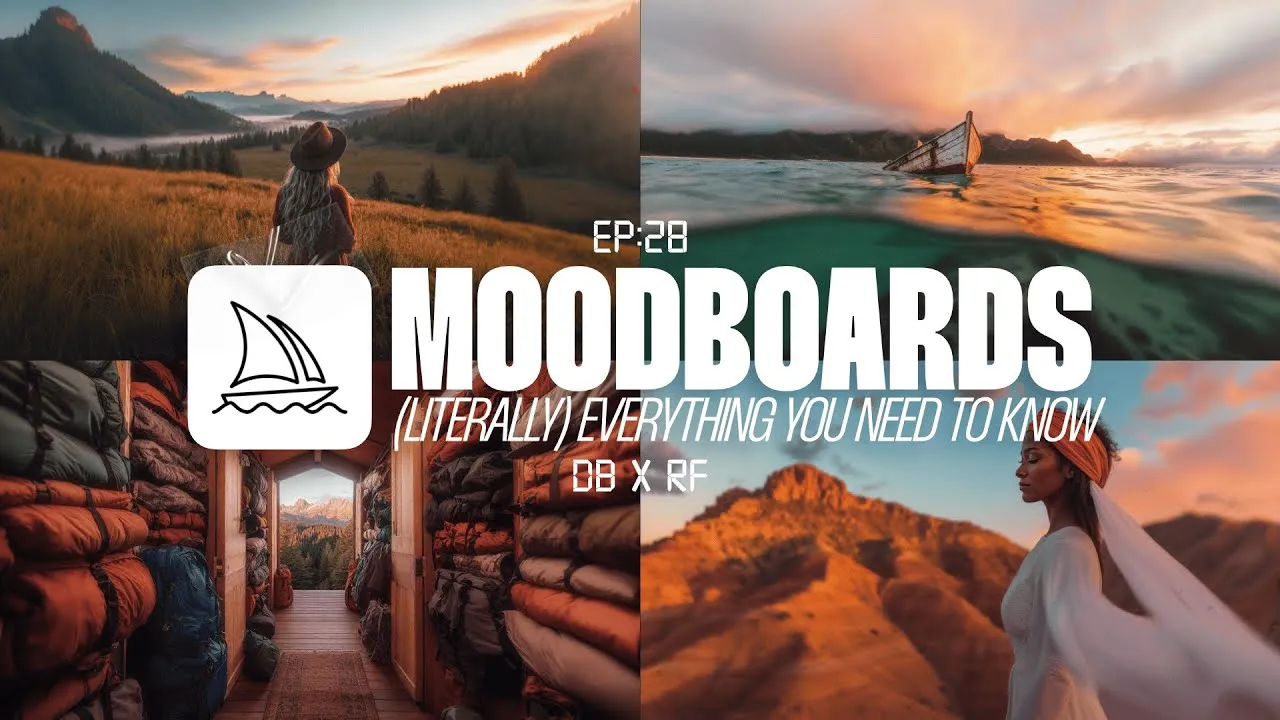
Episode 33 is an unscripted moodboard deep-dive: Rory and Drew debate ideal moodboard size (15-25 images for a tight but variable set), why one bad reference image can wreck the whole mix, and why stacking a personalization code on top fixes moodboards' soft "smoosh face" skin. They also resurrect Wabi-Sabi, a forgotten old Discord-era token for natural-looking people, and close by digging through early Midjourney V4 prompts.
Key takeaways
- 01
Keep moodboards to 15-25 images: Rory found 30+ gets too heavy on one trait, and a single bad reference photo can quietly wreck the whole mix.
- 02
Define the end goal before building a moodboard: a short 1-3 image token-style set, a storyboard-style set, and a 90+ image "long game" set all behave differently.
- 03
Always stack a personalization code on top of a moodboard: without it, Rory and Drew say faces come out softer and closer to 'smoosh face' than with it.
- 04
Try the Explore page's smart-search (magnifying glass) icon on your own generated images to surface similar ideas you'd never find by typing a fresh prompt.
- 05
Rediscovered token "Wabi-Sabi" (the Japanese aesthetic of imperfection) still reliably pushes Midjourney people-prompts toward more natural, less synthetic-looking skin and features.
- 06
Rory's rule for moodboards with people: more images of people, not fewer, reads more natural, and varying camera angle prevents the set from defaulting to one low angle.
- 07
Drew argues Midjourney's interface, not its model quality, is the real barrier to the "everyday user" access Midjourney says it wants ahead of V7.
Receipts · said on the record
“One image can screw up the entire mood board. I learned that by adding a couple extra ones … and then the generations I started getting were crap. So I removed two to three of them and it was 10 times better.”
“You gotta think if it's a hundred images, that each image would have a 1% take. If it's 20%, they each have what, 5% take? So you remove two images, you're changing the whole thing by 10%, right?”
“But when I do it without it, I get that softer … smush face. It's very similar to C-Ref: when C-Ref transfers a face and it's not perfect, it gets a little bit more fuzzy or less clear.”
“In traditional Japanese aesthetic, Wabi Sabi is centered on the acceptance of transience and imperfection. The aesthetic is sometimes described as one of appreciating beauty that is imperfect, impermanent and incomplete.”
“The barrier to entry with Mid Journey is the interface. You've got so many things in here that just aren't very intuitive. You have to get a training session from someone like us, or spend a lot of hours in here.”
“There's such a spark with some of the Mid Journey stuff that I can't get anywhere else. I don't know how to say it. There's more detail applied to environment in Mid-Journey than any other generator.”
Chapters
- 0:00:00 Welcome and project talk
- 0:03:55 Mood board basics
- 0:07:07 Defining goals for mood boards
- 0:11:51 Midjourney interface updates
- 0:15:43 Prompting strategies
- 0:19:26 Coherence in AI tools
- 0:22:13 UX challenges and design
- 0:26:01 Realism vs. artistic style
- 0:34:34 Workflow and remixing
- 0:39:07 Advanced mood board tips
- 0:43:53 Improving image quality
- 0:48:02 Smart search and discovery
- 0:53:13 Refining image fidelity
- 1:03:24 Wabi-sabi and tokens
- 1:09:30 Looking back at V4
Questions this episode answers
What is the "Wabi-Sabi" Midjourney token?
Wabi-Sabi is an old Discord-era Midjourney prompt token drawn from the Japanese aesthetic of accepting transience and imperfection. Drew rediscovered it after more than a year and found it still pushes people-prompts toward a more natural, less synthetic look.
How many images should a Midjourney moodboard have?
Rory's sweet spot is 15 to 25 images: enough for variety without one image (or a bad one) overpowering the mix. Drew notes that at 20 images, each one already carries roughly a 5% weight in the blend, so removing two can shift the result by 10%.
Why do Midjourney moodboards give people "smoosh face" skin?
Rory and Drew say moodboard-only outputs often render skin softer and less defined, similar to how Midjourney's C-Ref imperfectly transfers a face. Stacking a personalization code on top of the moodboard is what restores sharper, more textured skin.
Does ranking photos for Midjourney personalization actually change your results?
Rory says yes: he built a profile by ranking only photo-realistic images, and the same prompt run through that profile came out photo-realistic while the same prompt without it produced oil paintings.
What did Fast Hours say is holding Midjourney back for new users?
Drew argues the real barrier to entry isn't image quality but Midjourney's interface: new users need a training session or hours of practice to learn folders, parameters and reference types that aren't self-explanatory.
Show notes
Fast Hours Podcast Ep.33 Midjourney After Dark—Organized Chaos & Wabi-Sabi
Drew and Rory sound like they know what they’re doing as they dissect the messy art of mood boards, style references, and Midjourney’s ever-changing quirks, but can they be trusted?
They debate whether organization is a blessing or a curse, try to make sense of image ranking, and wonder if Midjourney’s interface was designed by someone who actively dislikes users.
Along the way, they rediscover old tokens/techniques (like wabi-sabi) that were apparently genius all along—if only they had remembered them sooner. They break down the fine line between coherence and chaos in image generation, test the limits of personalization, and realize that sometimes the best creative breakthroughs come from happy accidents.
They wrap things up by reminiscing about the good old days of Midjourney V4—because nostalgia makes everything seem better. It’s part creative therapy, part AI troubleshooting, and entirely a reminder that no one really has this figured out.
🎧 Listen now on YouTube, Spotify, or Apple Podcasts.