EP 085 · 87 MIN OPUS FEELS LIKE MIDJOURNEY NOW
Claude Opus Feels Like Midjourney Now
The short version
Episode 85 argues that Claude Opus 5.5 feels like Midjourney: give it resources and minimal direction and it improvises. Rory shows a custom podcast-clipping system built on the Riverside MCP, with a blind grader and coded motion graphics, plus the new Fast Hours website. Drew redesigns his site around his kids' handwriting, and Rory animates a Lord of the Rings scene in code with Magnific sound effects and an ElevenLabs voice.
Key takeaways
- 01
Opus 5.5 behaves like Midjourney: hand it resources and minimal direction and it improvises. Rory's promo, clip graphics and website all cascaded from one design system.
- 02
Build a blind grader: Rory's clipper reads the transcript one word at a time, judging hooks like a cold social viewer rather than with full-episode context.
- 03
Teach the clipper who you are: define audiences per channel, rank clip categories, and forensically break down saved Shorts, or it flags off-brand 'viral' moments.
- 04
Hooks don't have to come first in sequence: the clipper pulls the strongest hook from anywhere, then lets the speaker keep talking to supply the context.
- 05
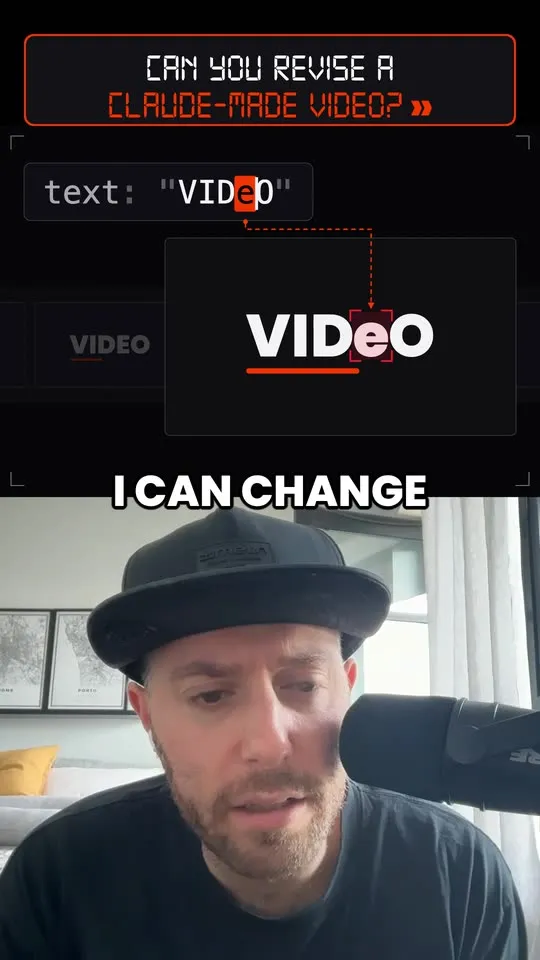
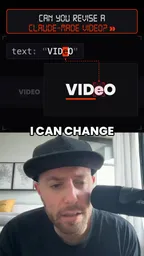
Code-rendered motion graphics answer the revisions worry: changing one letter in one frame is a one-line edit, and the work can export to After Effects.
- 06
Treat one-shot outputs as first drafts: Drew says the typography, music and pacing critiques are all fixable through iteration and prompting.
- 07
Let a good run keep going: from one Midjourney image, Rory's build produced a character, environment and rig asset library he never asked for.
Receipts · said on the record
“One of the absolute wildest things that I've realized from the last week is that Opus sort of feels like Midjourney. … It doesn't need to be point for point, direction for direction.”
“It reads through the transcript one word, one word at a time. It does not ingest the full thing and then go back.”
“Plot twist, all of those things can be corrected through iteration and prompting. What are we talking about?”
“What happens when you want to go back and change something? I'm like, it's a line of code. It can just go rewrite it.”
“If I put everything out on the table, there's gotta be something you can make, like just with your creative brain.”
“I think everyone needs to sort of like dream a little bit bigger right now.”
Chapters
- 0:00:00 What's coming in Fast Hours 85?
- 0:04:20 Why does context improve creative quality?
- 0:05:35 Why does Claude Opus 5.5 feel like Midjourney?
- 0:06:07 One design system, a creative domino effect
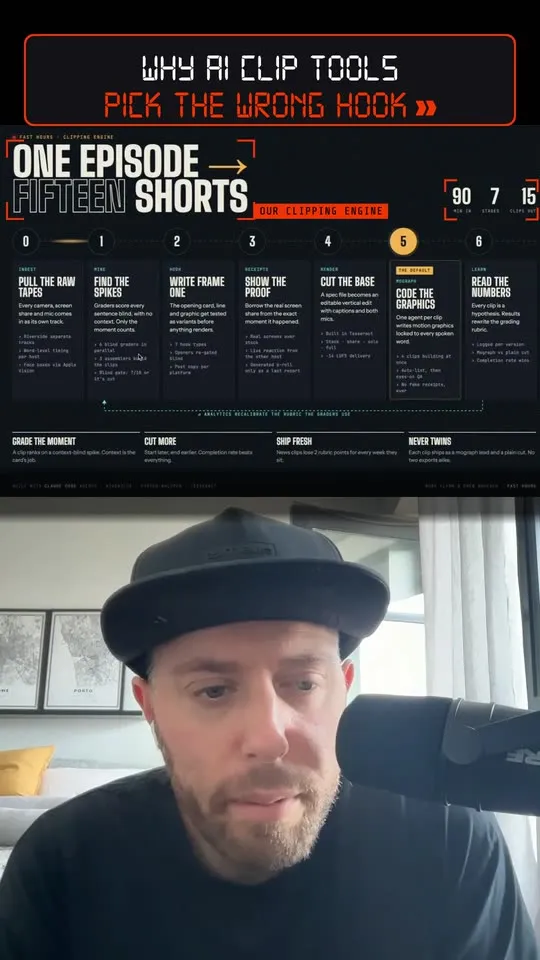
- 0:09:07 We built a custom AI clipping workflow
- 0:10:01 A blind grader judging clip hooks?
- 0:13:35 Why does Riverside MCP matter for clipping?
- 0:14:26 How do reference clips train an AI editor?
- 0:16:37 How do you build clips around out-of-order hooks?
- 0:19:32 Podcast clips get branded motion graphics
- 0:23:52 Motion designers losing their sh*t over AI democratization
- 0:29:58 How precise are code-based motion graphics edits?
- 0:32:14 Domain expertise raises the ceiling for AI motion design
- 0:39:17 Drew let his daughters' handwriting shape his brand website
- 0:44:52 How do you prompt a cohesive website redesign?
- 0:49:56 Fast Hours builds a website from its creative DNA
- 0:52:05 Can transcripts power a searchable website?
- 0:58:28 Music-reactive web design with a face
- 1:00:20 Code-based animation gets a story to tell
- 1:04:00 How does one image become an animation asset library?
- 1:05:48 How do AI tools add animation and narration?
- 1:11:24 How does ElevenLabs find a voice from a description?
- 1:16:15 How real does a Tavus conversation feel?
- 1:21:41 What will Phil Rivers teach about AI operations?
Questions this episode answers
Why does Fast Hours say Claude Opus 5.5 feels like Midjourney?
Rory argues Opus 5.5 doesn't need point-for-point direction: it has a creative streak and runs with minimal instructions. Given resources and context, it built the hosts' promo, clip graphics and website with little steering.
How does the Fast Hours AI clipping workflow work?
Rory's system pulls raw recordings and transcripts through the Riverside MCP, grades moments against audience and channel definitions he wrote, and uses a blind grader to judge hooks. It then cuts the split screen and codes motion graphics from the hosts' promo design system; a run takes about two hours.
What is a blind grader for podcast clips?
It's a concept Opus came up with for Rory's clipper: it reads the transcript one word at a time instead of ingesting the whole episode, so it judges a hook the way a cold viewer on social media would.
How was the Fast Hours website built?
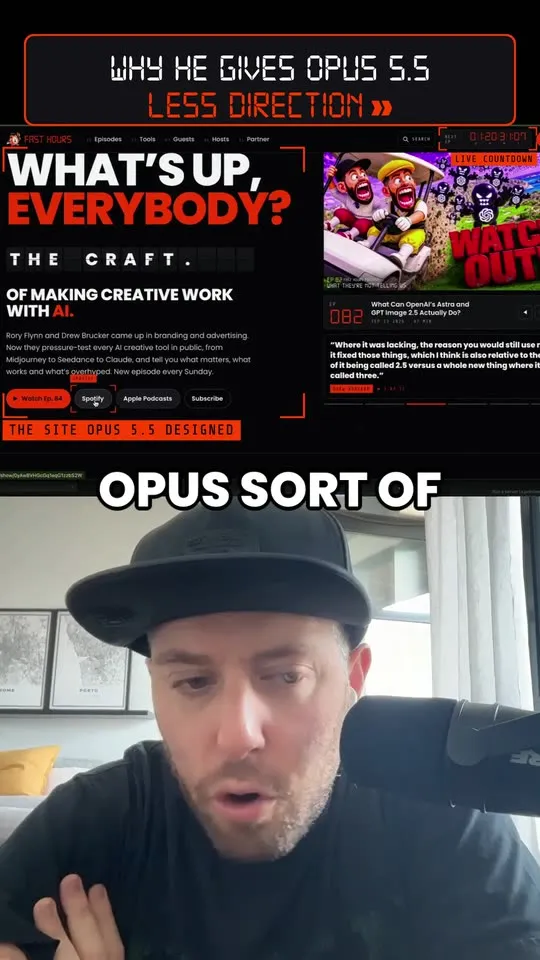
Rory gave Opus the podcast page, the promo video as a pseudo design system, the clip reels, the goal of growing through SEO and AEO, and access to MCPs including Riverside and Magnific. It ran for about an hour and a half, and he says he has made only minimal changes since.
How did Rory animate a Lord of the Rings scene with code?
Starting from one Midjourney image, the build generated an asset library with ChatGPT's image generator, then Claude animated it in code as one continuous four-minute scroll, with Magnific sound effects and an ElevenLabs voice. Rory says he made ten to fifteen variations, and every part stays editable.
Show notes
Claude Opus feels like Midjourney because it can take minimal direction and produce imaginative visual work.
Drew Brucker and Rory Flynn gave Claude Opus room to create, then watched the to-do list get ambitious (their neglected websites finally got some attention). A promo’s visual style carries into animated podcast clips, while a handwriting experiment reshapes Drew’s site.
Claude Opus powers motion graphics, podcast clipping, and website builds from creative references. Midjourney supplies the creative comparison and visual references for animation. Riverside Model Context Protocol connects recordings and transcripts. ChatGPT image generation builds animation assets. Magnific and ElevenLabs support sound effects and narration.
The episode, narrated
The ingredients are on the table.
Two hosts. One week with Opus 5.5. They built a clipping machine, two websites and a four-minute film made entirely of code. This is the whole episode, narrated chapter by chapter, with every business lesson pulled out and pinned to the moment it was said.
The 30-second version
- 01
Context now sets the ceiling. Feed a model your real raw material and minimal direction produces work that used to need a team.
- 02
Small and tailored wins. Two people out-built clip tools with whole teams behind them by designing for one audience.
- 03
Judge the trajectory. A first draft is a demo. The question is what it unlocks for you.
00Shorts · The episode in clips
The episode in 10 shorts.
The motion-graphic cuts from this episode, in episode order. Tap any one to watch the run back to back.
The week the walls came down.
Episode 85 opens on October 2 with a Halloween joke that doubles as the thesis. Drew asks who's spooked right now. His answer: motion designers.
The reason is Opus 5.5. It shipped quietly a week earlier, and both hosts spent the week running jobs that took fifteen minutes to two hours. Rory says he got more done in one week than ever, and used about half his usage doing it. Drew has run more long generations in three weeks than in his entire history with language models.
Drew describes the old barriers as locked gates, high walls and barbed wire. Creatives without motion experience now get in. Then he names the condition that makes the speed matter.
“Speed matters, but only if the quality's there. And the quality is there because the context is there.”
Rory offers the comparison that frames the hour. Opus behaves like Midjourney. It doesn't need point-by-point direction. Give it a little and it imagines.
Then he describes a cascade. Last week's promo video became a design system. The design system became animated B-roll for their clipping tool. The same system became a website.
“Here's all this context. Could you build a website that kind of looks like this? And it was like, yeah, all right, gotcha fam. Just went and did it.”
One system, four outputs
The cascade Rory described. One promo video set the look for everything after it.
- 01Promo videoLast week's demo
- 02Design systemType, color, motion rules
- 03Clip B-rollMotion inside every short
- 04Podcast websiteBuilt in ~90 minutes
Two people versus a product team.
Drew zooms out to the business. The show is weekly and consistent. Sponsorship talks have started. The obvious next move was hiring someone for clips and motion work.
Both hosts run their own companies, so time is the constraint. Then comes the comparison that drives the rest of the episode. Clipping platforms have whole teams. Those teams move through approvals, stakeholders and subjective opinions. Two individuals strung a better tool together in a day or two.
“Somebody like you or me can basically string this together in a day or two and get better results. Just objectively better results.”
Approvals vs. a day or two
Same feature. One path stops at every gate. The other ships.
Enterprise product team
- Approvals
- Stakeholders
- Opinions
- Sign-off
IN REVIEW 4 gates
Two people + Opus 5.5
SHIPPED No gates
Rory pushes further. He rebuilt a clipping tool in the style of Opus Clip, locally. Off-the-shelf tools optimize for everyone's average result. His version knows the Fast Hours audience. It sorts clips by funnel stage. It splits viewers into people who know the show and people who have no idea who these guys are.
The best idea came from the model itself. It proposed a blind grader: read the transcript one word at a time and never look ahead. That is how a stranger meets a clip in the feed.
“If you're seeing something on social media for the first time, you don't have any idea what's coming next.”
Be the blind grader
Real openers from this episode's shorts, one word at a time. Grade it, then watch the clip it opens.
-
1/6
What? It's slinging insults now.
Grader: Keep watching
A live reaction with zero setup. Insults from what, and from whom? The only way to find out is to stay.
-
2/6
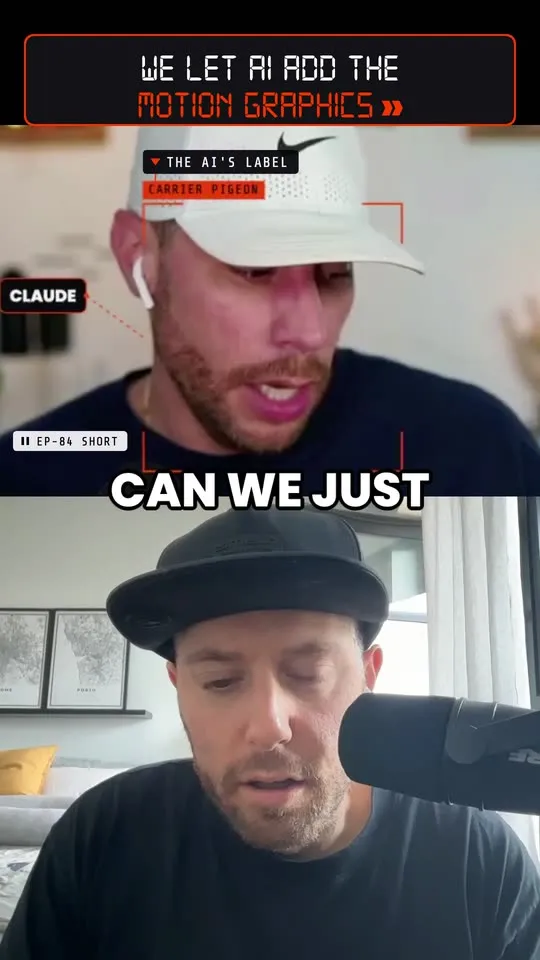
Can we just for a moment appreciate the computer vision labeling you as carrier pigeon?
Grader: Keep watching
A strange label with the laugh already built in. Who got called carrier pigeon, and by what? You need the next shot.
-
3/6
Basically rebuilt OpusClip. We built it locally.
Grader: Keep watching
A bold claim with a name you know. Two people rebuilt a funded product on a laptop? That is a claim you stay to see proven.
-
4/6
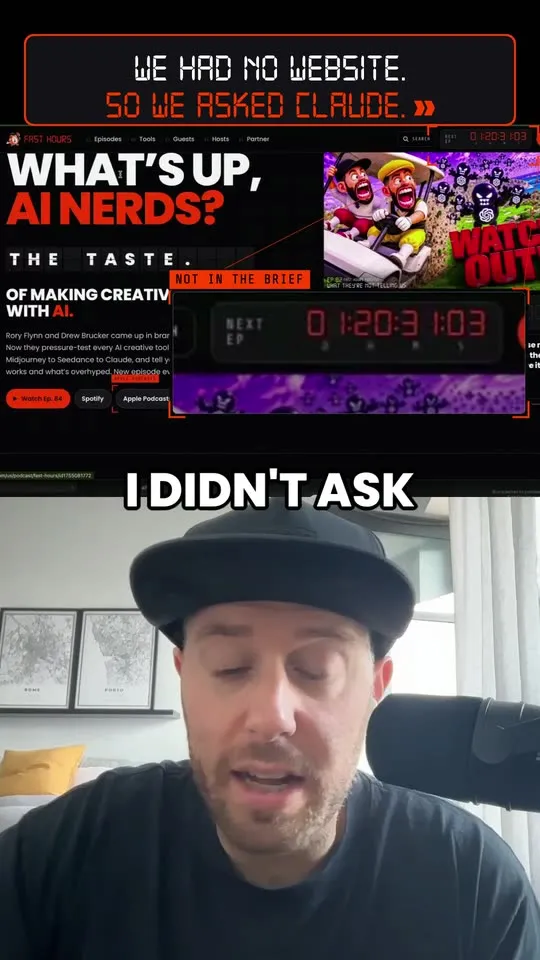
I didn't ask for any of this.
Grader: Keep watching
Proof first. Something got built that nobody asked for. The sentence makes you ask what, and the clip answers.
-
5/6
I can change one letter in one frame in the middle of the video with a simple edit.
Grader: Keep watching
A precise, checkable claim. One letter, one frame. Specific beats clever, and it earns the next second.
-
6/6
Michael Jordan sucks.
Grader: Scroll past
The trap. It's grabby and it might travel. It also sells nothing the show does. The audience definition kills it before it ships.
How it works
The grader never reads ahead. A hook earns the next second only if it opens a loop on its own. Five of these open real Episode 85 shorts. One is a trap.
Inside the clip machine.
Rory opens the hood. The key piece is the Riverside MCP.
Riverside records each speaker and the screen share as separate local files. Downloading those every week would eat gigabytes for maybe ten usable minutes. Now the machine pulls the raw files and the transcript straight from the source.
The hard part was taste. Rory fed it the podcast shorts he'd saved for months, the ones with jump cuts and crash zooms, and had it break their editing down forensically. Then he taught it who the hosts are. Early runs flagged random lines as viral. His example: a throwaway like “Michael Jordan sucks” might travel, and it has nothing to do with the business.
The machine, stage by stage
Click a stage, or run the whole thing. The real run takes about two hours.
- 01 Pull the raw tape Pull The Riverside MCP pulls each speaker track, the screen share and the transcript. No weekly gigabyte downloads for ten usable minutes.
- 02 Study what works Study Months of saved podcast shorts, broken down forensically: jump cuts, crash zooms, pacing. That became the machine's editing knowledge base.
- 03 Define who it's for Define Who the hosts are, who should see this and where it will run. YouTube Shorts and LinkedIn get different audiences and different messages.
- 04 Rank the categories Rank A hierarchy of clip types, like tool demos versus personal stories, mapped to each channel and funnel stage. Viewers who know the show get different clips than strangers.
- 05 Blind-grade the spikes Grade The grader reads one word at a time and finds the moments that land with zero context. Rory says this is where he put in the most work.
- 06 Write the open Hook It writes the opening from seven hook types. The hook can come from anywhere in the episode, out of sequence, or loop the ending back to the start.
- 07 Flag compliance Check A compliance pass flags anything that could get the channel in trouble with YouTube again.
- 08 Cut and animate Animate Split screen, auto speaker switching, then coded motion graphics in the promo video's design system, animated over the narration with no direction.
- 09 Learn from the numbers Learn A built-in analytics layer reads performance so the system can self-optimize. Two weeks in, this part is just starting.
The output is a manifest of the top ten moments, each with a destination, a length and an opening line. Then Opus animates over the narration with no direction. At one point its computer vision labeled Drew a carrier pigeon. Nobody asked for that. Both hosts loved it.
“You would have had to work at least two or three times harder, at a minimum, to get it to this before this was possible.”
“It had this direction. It had an intent. And then it just ran with it.”
Motion designers are asking the wrong question.
Drew posted a few one-shot motion pieces last week. They came straight out of Claude, with no connectors and no MCPs. Most people said wow. Some motion designers said slop.
The critiques were specific: weak typography, icon design, the music, the pacing. Drew's reply is the hinge of the episode.
“Plot twist: all of those things can be corrected through iteration and prompting.”
Rory's version is shorter. A change is one line of code. He can change one letter in one frame in the middle of a video. It can export to After Effects or wire into sound libraries, and then you own the full file.
Drew calls it a crossing-the-Rubicon moment for the discipline. He has watched the same cycle hit photography, 3D and video. He felt it himself as a hobby photographer when image models arrived. His advice to experts: drive what this becomes. People were mad about cars when everyone rode horses.
Rory adds a warning for the cheerleaders. Novelty decays. Scroll X long enough and every “have fun, make whatever you want” output starts to look the same.
“If you saw enough of them, they look the same. There's a pattern. And if you see it enough times, it just loses its novelty.”
Drew maps the moment onto a curve they both lived through with Midjourney.
-
Stage 1
Motion is here
Wow, it's possible
The Discord era. Everyone types a line and gets something. “Make this a Super Bowl commercial.” The crowd is amazed by access.
-
Stage 2
Craft shows up
People learn the levers. For images that meant prompt structure, hierarchy and camera angles. For motion it means pacing, scoring and timing.
-
Stage 3
Experts take over
Domain experts bring real pre-production. Character breakdowns, alpha masks, depth maps. The ceiling moves to whoever knows the craft.
Then the proof. Rory plays a breakdown from a working motion designer who uses Claude with a full pre-production process. The result is an interactive website that has to boot before you can enter it. Drew's verdict: this is the valuable stuff.
“Any motion designer who's complaining about this, you should just be like, I can't believe this. I don't even have to do the first pass.”
Cook from what's in the fridge.
That demo site raises Drew's next point. Websites used to share wireframes. Webflow and Framer loosened the box. Now there are no creative limits at all.
The cost is ambiguity. A visitor lands on a screen they've never seen before and doesn't know what to do. Every site can be unique, and every site can be confusing.
Rory reframes the whole week as an episode of Chopped. Here are your ingredients. Make the best dish.
“If you can't cook something from what's in your refrigerator, it's not good enough. If I put everything out on the table, there's got to be something you can make.”
Then he turns it into a hiring test. Put pickles and hot sauce on the table. See what the candidate makes. Drew's response is two words: “Steal that.”
Look back at the episode through that lens and every build had a basket.
The episode's mystery basket
Pick an ingredient. See the dish it became.
His daughters' handwritingDrew
IngredientHis daughters' handwriting
- Handwriting cut into a typeface
- Doodles, annotations and a new logo
- A TV motif with scan lines and channel dials
- Motion reels on every work page
DishThe Brainchild site refresh
▶ Hear it · 0:39:13Last week's promo videoRory
IngredientLast week's promo video
- Promo video treated as a design system
- Animated B-roll inside every short
- The visual language of the podcast website
DishA design system that kept paying
▶ Hear it · 0:06:19Every episode transcriptRory
IngredientEvery episode transcript
- Mention counts for tools, topics and guests
- A page per guest and per episode
- A blog post per episode for SEO
- Search across the whole archive
DishA podcast site with real depth
▶ Hear it · 0:51:38Months of saved shortsRory
IngredientMonths of saved shorts
- Forensic breakdown of editing styles
- A knowledge base of cuts and zooms
- Graders that find the spikes
DishA clip editor with taste
▶ Hear it · 0:14:15One Midjourney stillRory
IngredientOne Midjourney still
- Nine main characters, then secondaries
- Environments and detachable rig pieces
- A lineup to scale and a storyboard
- Four minutes, one shot, all code
DishA four-minute papercraft film
▶ Hear it · 1:04:00An old particle workflowRory
IngredientAn old particle workflow
- Music-reactive particles he already loved
- His face and logo rendered in particles
- A one-screen bulletin board layout
DishA personal site that dances
▶ Hear it · 0:58:28A movie's chaotic kindergartnersDrew
IngredientA movie's chaotic kindergartners
- Reference: the big-eyed kids in Leo
- Seven to ten style mock-ups
- One chosen style, built out in the background
- Seven-to-ten-second engagement explainers
DishA cast of mischievous kids
▶ Hear it · 0:40:00The handwriting thread.
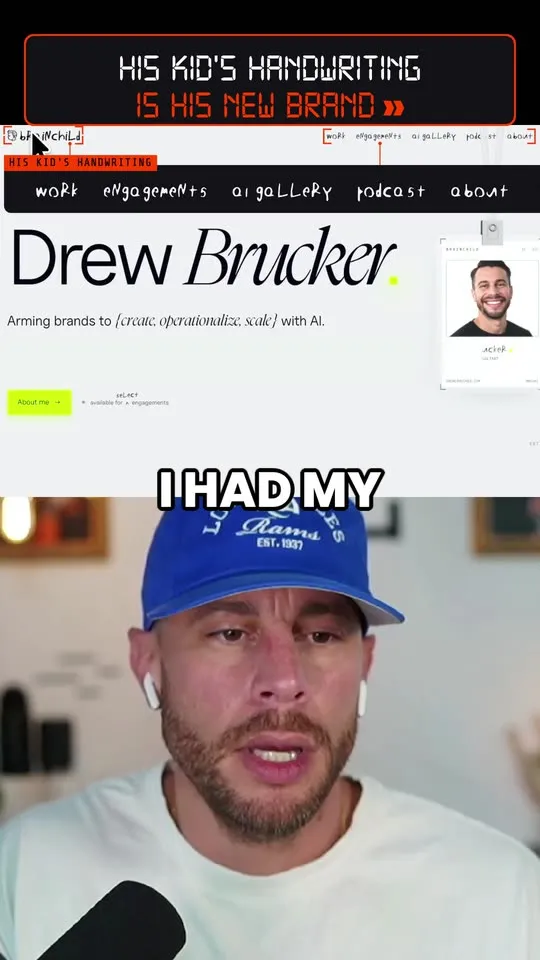
Last episode, Drew turned his daughters' handwriting into a typeface. This week he couldn't leave it in his head.
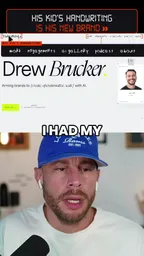
He threaded it through the Brainchild site. A new logo. Handwritten navigation. Doodles and annotations everywhere. A retro TV motif with scan lines, static and channel dials that switch on as you scroll.
He also wanted to explain his engagements without walls of text. So he built a cast of mischievous kid characters, inspired by the chaotic, big-eyed kindergartners in the animated film Leo. Magnific made the images. Higgsfield made the video. Each engagement now has a seven-to-ten-second motion piece that tells its story.
The turning point came mid-day. After hours of back-and-forth on the work page, he asked for its ten best wow-factor ideas. Then he stopped deliberating.
“Just give me a mock-up of this. Go all out. Where I don't have copy and context, put in placeholders. I gotta see it.”
The first mock-up gave him something to build on. It took a full day and plenty of iterations. The work pages now carry short reels for the brief, the approach and the work, so a visitor watches the engagement instead of reading about it.
“The limitations are the references now, really. The references and domain expertise might be the two things.”
Rory's review: cohesive, nostalgic, on-brand. Then a line built for the clipping machine.
“If I was a company, I'd hire Drew. Clip that.”
A website from zero.
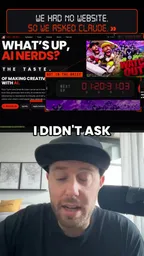
The Fast Hours site had almost nothing to start from. No brand guidelines. A Riverside account, a YouTube channel, a sponsorship page on Vercel and last week's promo video.
Rory reads the original brief aloud so it “doesn't feel as ridiculous.” Here it is, beside what came back.
-
The brief, as read on air
- I want to take a shot at something I never do, which is creating a website for us.
- We have a pseudo design system: the Fast Hours video we made last week, plus our motion graphics reels.
- I don't know what I'm doing building a website, but we're trying to grow our podcast via SEO and AEO.
- Run free. Design something unique to us that would resonate with our audience.
- You have access to all the skills and MCPs. Spin up Sonnet 5.5 subagents if you want.
Later steer: use Riverside, use Magnific, use whatever else you need. Runtime: about an hour and a half.
-
“I didn't ask for any of this”
What came back
- A countdown timer to the next drop
- A tune-in archive: a radio dial through every episode
- “Said on the record” hot takes, each linked to its moment
- Topics ranked by mentions, with an on-air or quiet status
- A page per guest with their quotes
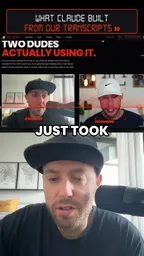
- Episode dashboards: summary, takeaways, clips, chapters, questions answered, show notes, full transcript
- A tools page: every tool by mention count, first mention, and how the hosts felt about it
- Search across tools, guests, episodes and transcripts
- Host bios written from screenshots
- A blog post per episode for SEO, written from transcripts
- A structure built for language models to read
Rory says he's made only small copy tweaks since. He had been dreading an SEO strategy and a blog post per episode. The transcripts already held the material, so the site wrote them.
Drew spots the bigger asset. Counting how often a tool, topic or guest shows up across every transcript is a method, and it travels.
“This is business intelligence too. The frequency and the volume of how many times a topic or a tool or a keyword has been mentioned has diverse application outside of just what we're doing here.”
Drew then asks the zero-to-one question about Rory's personal site. What do you feed it when you have nothing?
Rory's answer: an old music-reactive particle workflow he loved playing with, and one wish. His face and logo rendered in particles, pulsing with the music. Everything else sits on one screen like a bulletin board, because that's how his brain works. Drew calls it a modern newspaper.
 Short · 0:35 · Rory's buildWe had no website. So we asked Claude.
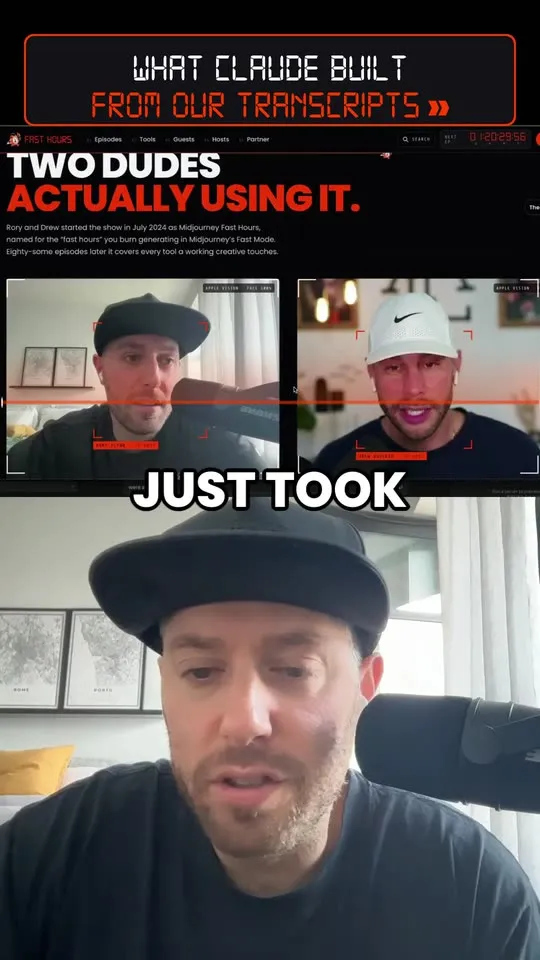
 Short · 0:48 · Rory's buildWhat Claude built from our transcripts
Video made of code.
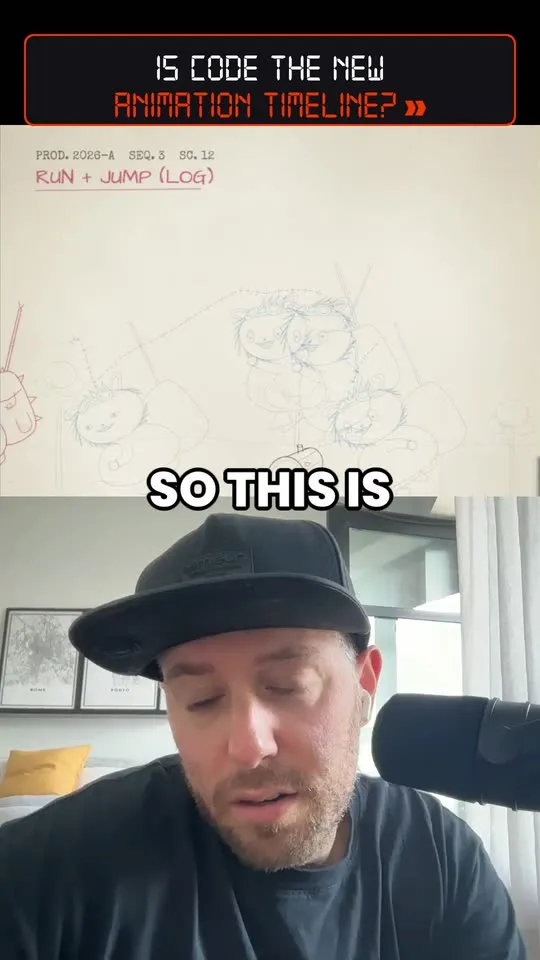
Rory shows a previs-style animation, the kind studios sketched before full production. It is rendered entirely in code.
He asks the question underneath it. Are we heading toward generating everything through code, because code is controllable? He sees people blocking scenes in Blender and three.js first.
Then the centerpiece. His daughter loves the characters from a big fantasy saga. The films are far too intense for her. He also refuses high-stimulation kids' TV. So he built a calm middle ground: a flat papercraft retelling with puppet-style joints, moving along one continuous scroll.
It started from a single Midjourney still, with ChatGPT's image generator building the assets. He asked for nine characters. The model kept going for two hours. Secondary characters. Environments. Detachable hands and legs for rigging. A lineup with everyone to scale. A storyboard. Rory checked in once.
“Are we building assets for an entire recreation or just the brief? … Keep going with your plan.”
One still. Two hours. One asset library.
What the model built after Rory asked for nine characters.
- 01 Seed: one Midjourney still
- 02 Main characters
- 03 Secondary characters
- 04 Environments
- 05 Rig parts: detachable hands and legs
- 06 Storyboard
- 07 Character lineup, to scale
“I just wanted to see the other nine characters. But it just kept going.”
Claude animated it. Magnific generated the sound effects and mixed them. It also searched the ElevenLabs library for a deep, raspy, country-British narrator. Ten to fifteen versions later, Rory had four minutes in one continuous shot. Generating that as video would not have worked.
When a joint in one character's leg poked out mid-walk, the fix was one message. And the sound, the part Rory hates doing, ran in the background.
“That's not my core competency. I'm not good at it. And I just did it.”
“I think everyone needs to dream a little bit bigger right now.”
The ideas pile up fast. Micro-documentaries built from research and a mood board. A faceless education channel that explains what the show covers, start to finish.
Rory loops back to Drew's case-study reels. B-roll makes their clips more engaging than two talking heads. Visuals also prove creativity in a way a written case study can't.
“Let's be honest, you always tell what's good. You never say what's bad.”
Drew adds that most case studies get written in case someone reads them. He closes the segment with a work in progress: one hub for his tools and actions, instead of ten or twelve scattered locations.
The video Turing test.
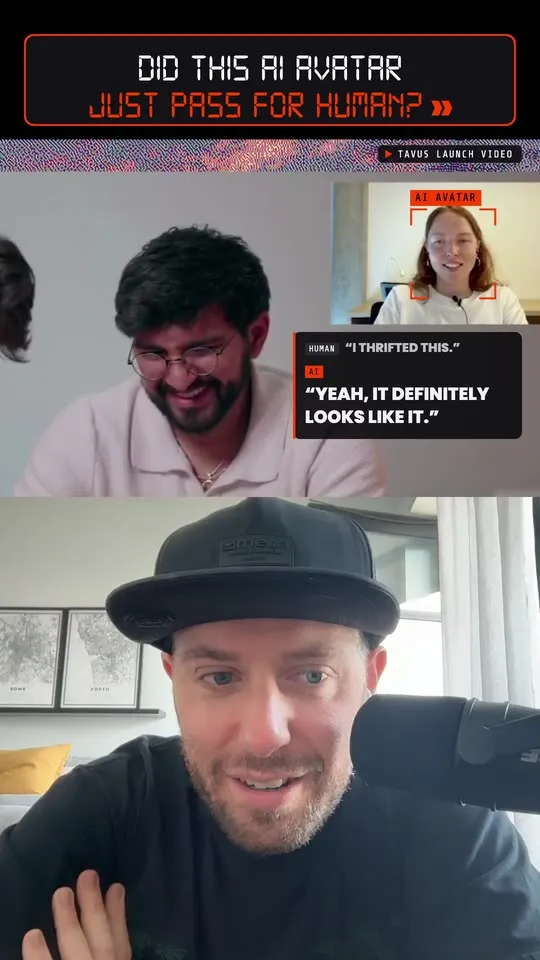
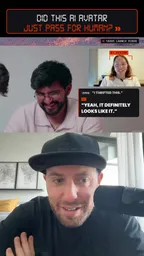
Drew cues a clip from Tavus. Their conversational video avatar was billed as passing the video Turing test.
The hosts react to the pacing, the intentional pauses and the tone shifts. It responds in real time, with no visible computing pause. Rory catches the mouth glitching and a slightly monotone delivery.
Then Drew catches something in their own reaction. Once you know it's AI, you start dissecting it.
“Maybe we're dissecting it because of the disclosure bias of us knowing. Whereas that's how some people talk.”
Same clip, two reviews
Flip the switch. The video doesn't change. The notes do.
Viewer doesn't know it's AIWatching it cold
- Natural pacing
- Intentional pauses
- Tone shifts mid-thought
- Answers in real time
Verdict: feels human
Viewer knows it's AISame clip, now under a microscope
- Mouth glitches on some words
- Lips a beat out of sync
- A little monotone
- Or is that just her personality?
Verdict: something's off
Rory's pitch: book a Tavus avatar as a guest. Possibly the most ridiculous thing the show has done. Drew is in.
Outside the episode: press coverage the following day reported that Tavus's Griffin model convinced 26 of 54 people it was human in live video calls. Source: Mix Vale, Oct 3, 2026.
Next week, and the closer.
Next week's guest is Phil Rivers, Rory's former business partner from email marketing.
Drew frames the booking against the usual playbook. The guest doesn't have a massive following, and that was never the point.
“They have this massive following. That said, that is not a distinguisher for value.”
Rory gives the preview. Their first agency ended around 2022, right as AI kicked off. Phil's new agency, started around 2024, was built the same way with about half the staff and higher margins. The episode will cover operations: getting a whole team on the same page and deciding where AI plugs in.
Rory's shout-out goes to the motion designers. Come leave terrible comments. They'll respond. Drew pitches a panel: one designer embracing this, one against it.
Then Drew delivers the line the whole hour was building toward.
“A one-shot output is not what you should be worried about. What you should be thinking about is what this unlocks. And then, selfishly, how can you leverage that?”
The sign-off rule, per Rory: you don't have to subscribe, but you have to tell somebody. In keeping with the Chopped theme, tell your local line chef. Or your pastry chef. He apologizes to the French audience for his pronunciation of pâtisserie.
11The lesson ledger
14 lessons from 87 minutes.
Every lesson is tied to the moment it was said. Click a timecode to hear it in context. Each one ends with something to do on Monday.
If you only steal three
- Lesson 01 · LeverageContext sets the ceiling
- Lesson 05 · DistributionGrade hooks like a stranger
- Lesson 10 · MindsetHire for the fridge
- 01 Leverage
Context sets the ceiling
“Speed matters, but only if the quality's there. And the quality is there because the context is there.”
Drew Brucker ▶ 0:04:15
Do this MondayBefore you ask for output, hand over the raw material: past work, transcripts, references, the reel you already made.
- 02 Leverage
Build once, cascade everywhere
“From there, there's a cascading effect.”
Rory Flynn ▶ 0:06:20
Do this MondayAfter every finished asset, ask what else it can power. A promo video became a design system, clip B-roll and a website.
- 03 Leverage
Small teams out-ship product teams
“These companies, these enterprise product teams, can't move fast enough.”
Drew Brucker ▶ 0:07:56
Do this MondayPick one tool you rent that serves everyone. Build the version that serves only you.
- 04 Distribution
Tailor to the audience you have
“I can build it specifically for us. And what it can understand is now our audience.”
Rory Flynn ▶ 0:09:14
Do this MondaySplit your audience into people who know you and people who don't. Make different clips for each, by funnel stage.
- 05 Distribution
Grade hooks like a stranger
“If you're seeing something on social media for the first time, you don't have any idea what's coming next.”
Rory Flynn ▶ 0:10:16
Do this MondayRead your opener with zero context. If it doesn't open a loop by itself, rewrite it.
- 06 Distribution
Define who it's for before you chase reach
“That's gonna be viral. But that has nothing to do with our business or our podcast.”
Rory Flynn ▶ 0:15:17
Do this MondayWrite down which topics outrank others on each channel. A viral moment that sells nothing you do is noise.
- 07 Mindset
A one-shot is a demo
“This was the first output I got. That doesn't mean I'm stopping there.”
Drew Brucker ▶ 0:26:12
Do this MondayJudge a tool on its tenth iteration. Critique the trajectory, then decide.
- 08 Craft
Novelty decays, so push past the default
“If you saw enough of them, they look the same. There's a pattern.”
Rory Flynn ▶ 0:29:16
Do this MondayTreat the model's default output as the floor. Add your brand, your references and a specific creative risk.
- 09 Mindset
Experts get the biggest multiplier
“I'm sort of the domain expert. I could 10X this.”
Drew Brucker ▶ 1:25:29
Do this MondayBring your craft vocabulary into the prompt: pacing, hierarchy, structure, scoring. That's where the gap opens.
- 10 Mindset
Hire for the fridge
“That might actually be a good one if I was hiring someone. Here's your interview.”
Rory Flynn ▶ 0:38:28
Do this MondayIn your next interview, hand over raw ingredients and no recipe. Watch what they make.
- 11 Craft
Show the work in motion
“I don't have to rely on just all the text of trying to describe what this engagement entailed.”
Drew Brucker ▶ 0:46:28
Do this MondayReplace one case-study page with a ten-second reel of the brief, the approach and the work.
- 12 Leverage
Your archive is business intelligence
“This is business intelligence too.”
Drew Brucker ▶ 0:54:15
Do this MondayCount mentions across your transcripts, calls or support tickets. Rank what keeps coming up and publish from it.
- 13 Leverage
Hand off your non-core work first
“That's not my core competency. I'm not good at it. And I just did it.”
Rory Flynn ▶ 1:11:16
Do this MondayList the tasks you avoid. Give those to the agent first, and keep the work you're best at.
- 14 Mindset
Watch for disclosure bias
“Maybe we're dissecting it because of the disclosure bias of us knowing.”
Drew Brucker ▶ 1:19:30
Do this MondayTest AI-made work blind before you tell reviewers how it was made. Compare the two sets of notes.